|
News


Live Webcast of His Holiness the Dalai Lama's teachings & talks
in Austria
Klagenfurt (Austria) -
19 May 2012
Second Day of Teachings in Klagenfurt

Photos of the second day of teachings in Klagenfurt
Under bright blue skies, His Holiness left early for the
teaching hall, where he first undertook the preparatory rituals
for the Medicine Buddha empowerment he was going to give. Those
done, he said he would first complete his explanation of the
Heart Sutra. The session opened with a recitation of that text
in German by members of the Tibet Center, Hüttenberg, who were
the organizers of the present series of teachings.


Quoting Nagarjuna, His Holiness explained that the reason we
seek to understand emptiness is to understand reality and to
eliminate wrong views and distorted ways of thinking. Wrong view
here relates to the second of the Four Noble Truths, the origin
of suffering. Once we begin to understand wisdom and eliminate
wrong view we may glimpse that achieving liberation is actually
possible. It is often said that those with especially sharp
faculties realise emptiness first and then generate the
awakening mind of Bodhichitta, whereas those who are less sharp
first generate the awakening mind and then work to understand
emptiness. His Holiness reminded his listeners that
understanding of emptiness comes about by listening to or
reading explanations of it, thinking about what you have heard
or read and then meditating on what you have understood.
Before granting the Medicine Buddha empowerment, His Holiness
teased the audience saying that some people think that once they
have received it they will no longer fall ill. It is not like
that, he said, citing the fact that he has been reciting the
Medicine Buddha mantra daily since he first received it at the
age of 13 and has eaten a great deal of Tibetan medicine and yet,
three years ago, he had to have his gall bladder removed. On the
other hand, he said that he has found the practice has some
special features, so there is benefit in receiving the
empowerment.
After lunch, His Holiness, accompanied by Gerhard Doerfler,
the Governor of Carinthia, attended a ceremony to award diplomas
to 73 graduates of the Tibet Center study programmes in Buddhist
Philosophy and Tibetan Medicine. In his speech congratulating
the graduates His Holiness recalled the international medical
conference convened by the Tibetan emperor in the eighth century
CE attended by delegates from Tibet, China, India, Persia and
Arabia. Nowadays too research in collaboration with modern
scientists is going on, paying particular attention to one of
Tibetan Medicine's special features: pulse diagnosis. His
Holiness would like to encourage further collaboration and to
that end has suggested that the 300 or so volumes of the Kangyur
and Tengyur, the scriptures originally translated into Tibetan,
mostly from Sanskrit, should be categorized under three headings:
Buddhist science, Buddhist view and Buddhist religion. The first
two categories would be of interest to scientists and other
researchers, whereas the third is only the concern of Buddhists.
Back in the teaching hall for the afternoon session several
questions were put to His Holiness. Among them was one asking
how Buddhist teachings help him deal with feelings of
helplessness or anger when confronted by what Chinese
authorities are doing in Tibet. His answer was, “When things
occur that have the potential to disturb your mind, that's the
time to apply the teachings.” He recounted the story of a senior
monk of Namgyal Monastery who spent 20 years in a Chinese prison.
After his arrival in India His Holiness was chatting to him one
day when he remarked that during his imprisonment he had faced
danger several times. His Holiness asked what kind of danger,
and he replied, “The danger of losing my compassion for the
Chinese.” His Holiness declared this to be the conduct of a real
practitioner, someone who kept up his practice even under duress.
Turning to Atisha's Lamp for the Path to Enlightenment His
Holiness explained how the Ngari King invited him to Tibet and
asked him to compose a text for Tibetans to follow. The great
Indian master complied by writing this concise Lamp for the Path
intended to capture the essence of the Buddha's teachings. This
seminal work, encompassing the entire Buddhist path to
enlightenment, subsequently inspired commentaries in all four
Tibetan Buddhist traditions, including Je Tsongkhapa's three
volumes of the Stages of the Path. Finally, His Holiness gave an
incisive exposition of the Seventh Dalai Lama's Song of the Four
Mindfulnesses. Derived from a lineage passed from Je Tsongkhapa
to Je Sherab Sengge and on to Gendun Drup, the first Dalai Lama,
it reminds the practitioner to remember his or her teacher, the
awakening mind, his or her body as a divine body and the view of
emptiness.
In his words of thanks at the end, His Holiness expressed his
gratitude to Carinthia Governor, Gerhard Doerfler, for his
steadfast interest and support, and to Geshe Tenzin Dhargye for
overseeing the entire event. He also thanked the Tibet Centre
organizers, the translators and all the students who had come to
listen. The organizers announced that, of the approximately
€97,000 remaining from contributions and ticket sales for the
five teaching events they have arranged during His Holiness's
current tour, 30% will go to the organizers, 30% for charitable
purposes in the locality and 40% to the Dalai Lama Trust.
His Holiness folded his hands and smiled as he left the crowd
with his final remark: “The source of happiness is the mind
itself. Good night.”
Klagenfurt (Austria) -
18 May 2012
First day of Teachings in Klagenfurt

His Holiness the Dalai Lama giving Buddhist teachings in
Klagenfurt Messehalle
From his hotel overlooking the beautiful Wörthersee Lake His
Holiness was driven this morning into the city of Klagenfurt,
where many people were waiting to welcome him in front of the
City Hall. The Klagenfurt City Band was playing as children
proffered him gifts. The Governor of Carinthia and Mayor
Christian Scheider made welcoming speeches before presenting him
with the Gold Medal of Klagenfurt. His Holiness then inscribed
the city's guest book.

His Holiness the Dalai Lama signing the Golden Book of City
of Klagenfurt
His Holiness said, “You have given me a very warm welcome,
which I appreciate. Many members of the public have come here
with warm hearts out of a sense of affection. Although there are
many beautiful cities and pleasing environments in the world,
the same kind of human beings live in them; on an emotional
level there are no differences among them. On the other hand,
the moment I start to think of myself as an Asian, a Tibetan, a
Buddhist, it creates a kind of barrier between us.”

City of Klagenfurt offering the City's Golden Medal to His
Holiness the Dalai Lama
He went on to say that as he nears 77 years of age, what he
has learned in his life is that a calm mind is the source of
stable, lasting happiness. He explained that today and tomorrow
he would be giving lectures on Buddhism, but that he always
stresses to people who belong to different religious traditions
that it is important, and often safer, to stick to the religion
they were born to. At the same time it can also be useful to
learn from other traditions, for example methods for developing
tolerance and compassion, and to apply them within your own.
Before he left for the venue of his lecture, the Klagenfurt
Hall, a group of children danced and sang, while His Holiness
beamed with pleasure. At the hall he remarked that although some
teachers like to sit on thrones like holy men, he prefers to sit
on a chair. Before beginning his teaching, he invited a couple
of Theravadin monks to recite the Mangalam Sutra in Pali.

Children dancing for His Holiness the Dalai Lama in front of
the City Hall
His Holiness remarked that, whether they do so explicitly or
not, all our major religious traditions deal with the mind, with
the cultivation of tolerance, forgiveness and compassion.
Theistic traditions tend to focus on God the creator, and
submission to God has the effect of reducing self-centredness.
Buddhism and other non-theistic traditions tend to rely on the
law of causality as grounds for taking responsibility for your
actions. Buddhism in particular addresses self-centredness and
arrogance but questioning the nature of the self.
A Sufi master His Holiness once met at a conference posed
three questions to him. What is the self? Does the self have a
beginning? And does the self have an end? His Holiness suggested
that Buddhism offers answers different from those provided by
other traditions, for example, only the Buddha's teaching says
there is no separate, intrinsic self. He told his listeners that
the text he would begin with, the Heart Sutra, or the Essence of
Wisdom, belongs to the Perfection of Wisdom teachings.

His Holiness the Dalai Lama speaking at the Meet the Press
After a lunch break, the Carinthian Governor accompanied His
Holiness to a meeting with the press. Invited to make a
statement, he said he had three things to say. “I am a human
being, so are you. We are all part of the 7 billion human beings
on this planet. All of us want to live a happy life, which I
believe depends on cultivating our natural inner values, rather
than money and power. The true source of happiness is within
ourselves and I call on the media to inform people about this.”
His second point was that because all religious traditions carry
essentially the same message about cultivating love, compassion,
forgiveness and tolerance, we need to live together in an
atmosphere of mutual respect. He cited India as a living example
of a pluralistic society in which all the world's major
religious traditions live peaceably side by side. Again, he
urged the media to bring this to public attention. His third
point referred to the importance of the media in a democratic
society. Media need to investigate what is really going on and
to be honest, truthful and impartial.
Back in the teaching hall, His Holiness began to explain the
Hear Sutra line by line, his words being translated into German,
Italian and English. He said that the Perfection of Wisdom
teachings to which the Heart Sutra belongs were given near the
Indian town of Rajgir as part of what is known as the second
turning of the wheel of Dharma. He pointed out that the third of
the Four Noble Truths, the truth of the cessation of suffering
can only be achieved by realizing wisdom, which in this case is
the wisdom understanding emptiness of inherent existence and
dependent arising.
Back at his hotel, before retiring for the day, His Holiness
held a meeting with several local Christian leaders and the
President of the Austrian Buddhist Society. He repeated his
conviction that inter-religious harmony is essential, because
each of our religious traditions gives its followers a sense of
how to lead a meaningful life. However, he also made it clear
that we can make a distinction between developing respect for
other traditions and faith in them. Considering the crisis of
values in the world, we need to take action rather than sitting
quietly by. The important thing is to make religion relevant to
our daily life rather than simply maintaining old traditions.

His Holiness the Dalai Lama meeting local Christian leaders
Tomorrow, His Holiness will begin the second day of teaching
in Klagenfurt by offering a Medicine Buddha empowerment before
continuing his explanation of the The Heart Sutra, Atisha’s Lamp
for the Path to Enlightenment and 7th Dalai Lama's Song of Four
Mindfulnesses.
Maribor (Slovenia) &
Klagenfurt (Austria) -
17 May 2012
The Art of Reconciliation Day in Maribor
Today was Art of Reconciliation Day, part of Maribor's
European Capital of Culture Programme and a bright, sunny day.
His Holiness the Dalai Lama began by greeting his fellow Nobel
Peace Laureates Muhammed Junus and Rigoberta Menchu Tum and
drove to the Slovene National Theatre, where they were welcomed
by young children on either side of the stairs singing “Morning
has come”.

During a meeting with the press, His Holiness spoke of the
need to reform our education systems to incorporate secular
ethics. He suggested that if young people were happy and
self-confident, as a result of such education, they would less
susceptible to becoming involved with drugs and violence. “An
important thing to remember is that no one can impose certain
ways of thinking on others, transforming our minds must come
about voluntarily. “
The three Nobel Peace Laureates, accompanied by local
Slovenian scholar Dr Lucka Kajfez Bogataj and moderator Dr Rudi
Rizman, took their seats on the stage for a panel discussion on
the theme, “Dialogue, Solidarity and Reconciliation”. Prof
Muhammed Junus opened with the suggestion that the very system
of capitalism, of which European countries are prime exponents,
is fundamentally flawed and profoundly needs changing. Rigoberta
Menchu Tum echoed his remarks by recalling the Mayans' view that
crises such as we are seeing now are a sign of decay. Not a
decay that can be repaired, but one which prompts us to start
again. She said we need the greater equality that will ensue
once the present selfish system comes to an end.
His Holiness responded that dialogue and solidarity are
extremely relevant to our world. We are faced with a rapidly
increasing population and diminishing natural resources. At the
same time the severe gap between rich and poor is wrong from
both a moral and practical standpoint. Damage to our environment
and climate change are problems not just for one or two nations,
but the whole of humanity. We therefore need to think of
humanity as one. Because we all have a right to a happy life our
old sense of “them” and “us” is out of date, what we need now is
a sense of solidarity that thinks instead of a greater WE.
Because we cannot fix the problems we face by force, we must
enter into dialogue with each other, an approach that means both
sides win instead of leaving a winner and a loser. His Holiness
declared, “Dialogue is not a luxury we may choose to enjoy, but
a simple necessity”. In this context the Buddhist concept of
interdependence is very useful, the concept is Buddhist in
origin, but is applicable in every field.

His Holiness the Dalai Lama welcomed by the Governor of
Carinthia, Mr. Gerhard Doerfler


His Holiness the Dalai Lama welcomed by a traditional
music band of Carinthia
Following lunch at the invitation of Mayor Franc Kangler, His
Holiness and his party left for the airport and a short flight
to Klagenfurt in Austria, which took them over snow-capped peaks
and forested mountains. The sun shone brightly as a red carpet
was rolled out to welcome His Holiness. Governor Gerhard
Doerfler of Carinthia and Mayor Josef Ofner of Knappenberg were
there to greet him, while a traditional Carinthian brass band
played in the background. From the airport they drove through
green countryside up to the town of Knappenberg, where His
Holiness had a short conversation with Governor Gerhard Doerfler
before walking to say a blessing at the site of a proposed Tibet
Centre. He advised that in addition to its Tibet related
activities the Centre could be a place where people of different
cultures and scholars of different religions would be able to
gather and exchange ideas and experiences, examining ways in
which people can become more compassionate. He also recommended
that the Centre take part in a dialogue in which he has been
involved for nearly 30 years, between science and Buddhist
science or ancient Indian thought, focussing on cosmology,
neurobiology, quantum physics and psychology.

His Holiness the Dalai Lama meeting Mrs. Carina Harrer
In nearby Hüttenberg, birthplace of Heinrich Harrer, a large
crowd was waiting on the Rieftanzplatz Ground. Harrer's widow,
Carina, the Carinthian Governor and Knappenberg Mayor welcomed
His Holiness, while members of the uniformed band and dance
troop of the local mining association looked on.

His Holiness the Dalai Lama speaking to the residents of
Hüttenberg, the birthplace of Heinrich Harrer
“Under this beautiful, bright sky, against this rich green
forest, your smiling faces with your different coloured clothes
and hair make you look like human flowers. Very beautiful”, His
Holiness began to warm applause. “When Heinrich Harrer escaped
from prison in India and reached Tibet, and eventually Lhasa, he
made friends with my mother and elder brother, which is how I
came to meet him. After that he used to come to the Norbulingka
to see me. He was the first European who introduced Europe and
technology to me”, he recalled. Since then till his dying breath,
Harrer remained a friend of Tibet, “But”, His Holiness added,
“his spirit remains here and you are continuing his deep
friendship for Tibet. Now, when Tibet, an old land with a rich
and ancient culture, is passing through a very difficult time, I
value your friendship. However, I am optimistic and I believe in
the power of truth and justice, and as I tell other people, no
matter what happens we must never give up our determination.
Meanwhile, positive change is taking place in China, sufficient
to remain optimistic.”

Repeating his hopes for the Tibet Centre, His Holiness
announced that he would make a donation of $150,000 to its
construction. Finally, noticing several Tibetan flags waving in
the crowd, he noted that these days the Chinese communist
authorities say it is a sign of splittists. However, he recalled
that in 1954 at one of their several meetings Mao Zedong asked
him if Tibet had a flag and when His Holiness answered “Yes”,
Mao said, “You should keep it”.
Klagenfurt (Austria) -
16 May 2012
His Holiness the Dalai Lama arrived in Austria today

His Holiness the Dalai Lama arrived in Klagenfurt airport
earlier this afternoon from Maribor, Slovenian. Mr. Gerhard
Dörfler, the Governor of Carinthia region welcomed His Holiness
the Dalai Lama at the airport. The was a traditional Austrian
welcome ceremony and a very large media was waiting for His
Holiness the Dalai Lama at the airport.
Governor Mr. Gerhard Dörfler is the host of His Holiness the
Dalai Lama’s visit to Klagenfurt.
Tibet Centre - International Institute of Higher Tibetan
Studies based in Hüttenberg is the main organizer of the
Austrian visit. The centre is a non-profit registered
association. It was established in 2006 under the Patronage of
His Holiness the Dalai Lama and continued support from the
Regional Government of Carinthia.
His Holiness the Dalai Lama made a short visit to Hüttenberg,
the birthplace of Mr. Heinrich Harrer, the author of Seven Years
in Tibet. Hüttenberg this year celebrates the centenary birthday
of their famous son. He also consecrated the construction of
Tibet Centre.
His Holiness the Dalai Lama will give four public talks, two
days Tibetan Buddhism teaching and take part in one day
symposium on Buddhism and Science during his visit to Austria.
He will visit Klagenfurt, Salzburg and Vienna, capital city of
Austria from 17 to 27 May. From 22 to 24 May His Holiness will
travel to Udine, Italy and Huy, Belgium.
Starting tomorrow in Klagenfurt, the capital of Carinthia,
His Holiness the Dalai Lama will give two days Tibetan Buddhism
teaching and a pubic talk on The Art of Happiness. In Salzburg
His Holiness will give the keynote address on World Peace and
Universal Responsibility jointly organized by the Alpine Peace
Crossing and the Tibet Centre on 20 May morning. In the
afternoon, His Holiness will take part in an interfaith dialogue
- Harmony in Diversity organized by the University of Salzburg
and the Tibet Centre.
The renowned Austrian quantum physicist Prof. Dr. Anton
Zeilinger, German neurophysiologist Dr. Wolf Singer and
Protestant theologian, Buddhism Prof. Dr. Michael von Brück and
other speakers will join His Holiness the Dalai Lama in the one
day Buddhism and Science symposium on Mind and Matter - New
Models of Reality in Vienna. The symposium is jointly organised
by the University of Vienna and the Tibet centre.
His Holiness the Dalai Lama will address the European Tibet
Solidarity Rally in Vienna, the final stop of his Europe visit
on 26 May 2012. The main message of the solidarity rally is
Tibet needs you. Now. It calls on Europe and the world to act on
the present situation in Tibet. For more information see
www.europefortibet.com
This is His Holiness the Dalai Lama’s 12th visit to Austria.
The first was in 1973 and second in 2007.
For Austrian visit details, see
www.dalailama.at
Media contact:
Mr. Tseten Samdup Chhoekyapa +43 688 960 2341
17 May 2012: 19:00 to 20:00 hrs – Central European Time
18, 19, 20 and 21 May 2012
06:00 to 08:00 hrs – Central European Time
18:00 to 20:00 hrs – Central European Time
Maribor (Slovenia) -
16 May 2012
His Holiness the Dalai Lama's second day in Maribor,
Slovenia
Meeting his host, the Mayor of Maribor, Franc Kangler, and
his staff this morning, His Holiness the Dalai Lama recalled how
much he had enjoyed his first visit to Maribor in 2010 and how
impressed he had been with what he saw of Slovenia. When Mr
Kangler proudly told him that, although Slovenia is a
comparatively small country, Maribor's football team had beaten
both Russia and Serbia here in Maribor, His Holiness remarked
that in the field of truth and justice too, size is not always
the deciding factor. He recalled that in 1959, the Tibet issue
was raised at the UN by Malaysia and Ireland, neither of them
large countries. Indeed, he said, it is sometimes smaller
countries who are less swayed by economic considerations and
more able to stand by their principles.

Mayor Kangler agreed, telling His Holiness that Maribor had
had to struggle to become the Cultural Capital of Europe. He
added that you have to fight for your rights, but having done so
you have to be prepared to shoulder the consequent
responsibilities. Next year, when Maribor is the European City
of Youth the Mayor said that as a gift to Tibetans the city
would like to invite Tibetan students to come to Maribor to join
in the events.
Before leaving for the University of Maribor, His Holiness
and the Mayor talked enthusiastically about the Slovene language,
its dialects and the varieties of language in the region.
Arriving at the University, the Rector Prof. Dr Danijel Rebolj
was waiting in the light rain to greet His Holiness and had a
short meeting with him before escorting him to the auditorium
where the Out of the Box Conference – Innovative Ways to Improve
the Culture of Living was taking place. His Holiness joined the
Rector, Prof. Denis Noble of the University of Oxford, who he
has met before, Prof. Dirk Helbing from Zurich and Prof.
Siegfried Grossman of Marburg University, Germany before an
audience of about 800.

His Holiness the Dalai Lama offering a Buddha statue and
Butter lamp to the Mayor of Maribor
After observing that on a fundamental level we human beings
are the same emotionally and physically, His Holiness declared
how pleased he was to join the other scholars to talk and learn
from each other. He said that despite his age, he still thinks
of himself as a student. He quoted an ancient scholar as saying
that even if you are going to die tomorrow it's still worth
learning something today. He said that thinking out of the box
and finding innovative ways to improve the way we live is not
only important, but it is something human beings are peculiarly
equipped to do. Education therefore is the key to improvement,
we have to think more holistically, not narrowly pursuing our
own interests, but understanding that if we neglect the
interests of others, ultimately we will be the losers. Therefore,
warm-heartedness is the guarantee of our own future.

His Holiness the Dalai Lama signing the guest book of
Maribor
Alluding to the importance of looking at challenges from a
different angle, His Holiness noted that when a tragedy occurs
it may provoke frustration and anger in you, but it may also
provide you new experience and insight that strengthens your
determination. He cited events from his own life, that he lost
his freedom at the age of 16 and lost his country at 24. On the
one hand it was sad, but on the other it liberated him from what
he considers useless formality and enabled him to meet many
different kinds of people from whom he has learnt a great deal
about the oneness of humanity.

His Holiness the Dalai Lama speaking to participants of
the luncheon, organized by the Mayor of Maribor
After he had attended an invited lunch with Mayor Franc
Kangler, about 2400 gathered to hear His Holiness deliver a
public talk on Cultivating Peace of Mind. Commenting on the
greater maturity of people in the latter part of a twentieth
century, a period during which many people regarded war as
unavoidable, His Holiness remarked that great changes had taken
place since the fall of the Berlin wall. The ideological
conflict of the Cold War came to an end. People began to take
much greater interest in preserving the natural environment and
acting to stop climate change. Meanwhile, among religious
communities there is a much greater acceptance of other
spiritual traditions. Therefore, he feels quite optimistic.
Once again His Holiness praised our marvellous human
intelligence, the sharpness of mind that enables us to think
things through and analyse them. Analysis allows us to judge
which of our emotions favour a calm mind and which disrupt it.
Through analysis we can come to understand that fear, anger and
jealousy undermine our peace of mind, while cultivating a more
compassionate attitude to others boosts our self-confidence,
which in turn supports a calm mind. Scientists have found that
peace of mind is good for our physical well-being, while
afflictive emotions like anxiety and suspicion eat into our
immune system.

His Holiness the Dalai Lama during the Public Talk in
Maribor
When it comes to discussing the moral principles that
reinforce our ability to develop a calm mind His Holiness says
he likes to take a secular approach. This is because a large
proportion of the world's 7 billion people have little interest
in religion and even those who profess to be religious are
little affected by it in their day to day lives. At the same
time humanity is facing many problems that are a direct result
of our lack of moral principles, which is why presenting ethics
in a secular context is so important.
His Holiness urged those who will come of age in the
twenty-first century to create a better world by cultivating
vision, determination and enthusiasm. While he admitted that the
UN, political leaders and the clergy may not be able to do much
to change the world for the better, His Holiness stressed the
need for individuals and smaller nations to seize the
opportunity to create a more peaceful, more equitable world.
“Don't give in to helplessness or hopelessness” he said, adding,
“Every one of you can make a contribution. I may not live to see
the results of your efforts, but you surely will. “
Many individuals came forward to ask His Holiness questions,
one young woman beginning by thanking him for showing the
goodness of smiling and laughter.
Tomorrow His Holiness is to join several other Nobel Peace
Laureates to discuss Why we need dialogue and solidarity in the
global crisis? at the National Theatre, Maribor, before
travelling to Klagenfurt, Austria in the afternoon.
Maribor (Slovenia) -
15 May 2012
HH the Dalai Lama arrives in Maribor, Slovenia, the Cultural
Capital of Europe

His Holiness the Dalai Lama arrives in Maribor airport
from Vienna
It was raining in London this morning as His Holiness left
for Vienna, Austria on his way to Maribor, Slovenia, at the
invitation of the Mayor, Franc Kangler. His Holiness was
accompanied to the door of his plane by David Cassidy of the
Templeton Foundation, his host during his brief visit to London.
During his transit stop at Vienna airport, His Holiness met
Kurt Seinitz, Foreign News Editor of Kronenzeitung, Austria's
largest newspaper with an average daily readership of nearly 3
million. Kurt Seinitz began by asking if His Holiness had a
message for the people of Austria, and he replied, “Nothing
special”. He went on to elaborate that Austrians like him are
just human beings, some among the 7 billion who want a happy
life and who have a right to achieve happiness. He pointed out
that happiness derived from mere physical comfort tends to be
shallow and fleeting, failing to pacify anxiety and fear,
whereas if we have a calm mind it is effective in overcoming
even physical pain, therefore we should not neglect the inner
values that are a source of a calm mind. His Holiness said that
he was most concerned to advise people to cultivate secular
ethics, those inner values beyond religion that help us lead a
peaceful and happy life.
His Holiness noted that he has a strong link with the
Austrian people because of his friendship with Heinrich Harrer
and Peter Aufschneiter. He recalled that he has been aware of
this special link since his first trip to Europe in 1973 and
offered his special greetings to all Austrians today.
A short flight took His Holiness and his party from Vienna to
Maribor, Slovenia's second city and currently the Cultural
Capital of Europe. He was met on the tarmac by his host Mayor
Franc Kangler with members of his staff and family. His Holiness
spoke briefly, recalling his first visit here 2 years ago. He
told assembled journalists that he wanted to share his
experience that since most of the problems we face are of our
own creation it is logical to think that a solution to them is
also in our own hands. We need to approach them with
self-confidence and whether we face problems on local or global
levels we must not lose our sense of optimism.


His Holiness the Dalai Lama and Mayor Mr. Franc Kangler
address the media at Maribor airport
Arriving at his hotel within sight of the Drava River, His
Holiness met the Mayor again and asked what changes had taken
place since he was last here. The Mayor told him that this year
Maribor is, jointly with Guimaraes, Portugal, the European
Capital of Culture. He added that next year Maribor will be the
European Youth Capital and asked His Holiness if he had time to
talk to the leaders of the European Youth Forum. They told him
that they are in touch with youth groups across Europe and in
Russian and Azerbaijan. They are also in touch with various
faith groups and advocate the kind of inter-faith dialogue dear
to His Holiness's heart. Asked what advice he would offer
European Youth today, His Holiness suggested that they should
not become demoralised because we need courage, determination
and self-confidence to solve our problems. He recalled his own
experience of losing his freedom at the age of 16, losing his
country at the age of 24, and yet he has not given up. He noted
that although there is great suffering in Tibet under Chinese
communist oppression, Tibetans steel themselves against it by
hoping for the best, but preparing for the worst.

His Holiness the Dalai Lama and Mayor Mr. Franc Kangler at
Hotel City in Maribor
His Holiness continued that young people in their teens and
early twenties belong to the 21st century, whereas he considers
himself to belong to the 20th century that is already over. The
20th century was, despite many momentous developments,
characterized by violence, bloodshed and oppression. If that had
resulted in a better, more stable world it might have been
justified, but that was not so, he said. Recent conflicts in
Iraq and Afghanistan are symptoms of mistakes originating in the
20th century. He urged young people today to ask themselves how
to solve problems they might face. What you need, he said, is a
vision that this 21st century will be an era of dialogue and
peace and he commended the steps already being taken in this
European Youth Forum.

His Holiness the Dalai Lama, Mayor Kangler and youth
leaders at Hotel City in Maribor
Tomorrow morning His Holiness has been invited to participate
in the University of Maribor’s Out of the Box Conference –
focusing on the theme: Innovative Ways to Improve the Culture of
Living – Special Session with World Thinkers. In the afternoon
he is to give a public talk on Cultivating Peace of Mind.
Geneva (Switzerland) -
15 May 2012
His Holiness the Dalai Lama to visit Maribor European
Capital of Culture 2012
This afternoon His Holiness the Dalai Lama will arrive in
Maribor, Slovenia - the European Capital of Culture 2012 at the
invitation of Mayor Mr. Franc Kangler and Rector Prof. Dr.
Danijel Rebolj, University of Maribor.
On 16 May morning His Holiness the Dalai Lama will be the key
speaker at the University of Maribor’s Out of the Box conference:
Innovative Ways to Improve the Culture of Living. His Holiness
and three prominent European scholars will address the Special
Session with World Thinkers. University’s Rector Prof. Dr.
Danijel Rebolj will moderate the session.
In the afternoon, His Holiness will speak on Cultivating
Peace of Mind. The public talk is part of the Maribor for Peace
- Nobel Peace Prize Laureates in Maribor initiative to raise
awareness of human values amongst its citizens and to inspire
them.
On the third and last day of the visit, His Holiness the
Dalai Lama with Nobel Laureates Dr. Rigoberta Menchú Tum, Prof.
Muhammad Yunus, and Prof. Lučka Kajfež Bogataj (member of 2007
Intergovernmental Panel on Climate Change) will address a peace
conference called Why do we need Dialogue and Solidarity in the
global Crisis? After the conference, His Holiness will unveil
the Peace and Reconciliation Mural in front of the National
Theater in Maribor.
From 10 to 18 May Maribor will host a number of Tibetan
cultural events - creating sand mandala, numerous lectures and
concerts.
His Holiness the Dalai Lama’s public talk and the peace
conference with Nobel Laureates in Maribor will be live webcast
via http://www.mariborforpeace.si and
http://tvslo.si/#tv.slo2
16 May 2012 - Wednesday 13:30 - 1530 hrs (European Time)
Public talk: Cultivating Peace of Mind
17 May 2012 - Thursday 10:00 - 11:30 hrs (European Time)
Maribor Peace Conference: Why do we need Dialogue and Solidarity
in the global crisis?
This is His Holiness the Dalai Lama’s second visit by to
Maribor. On 17 May afternoon His Holiness will leave for
Klagenfurt, Austria.
His Holiness the Dalai Lama will address the European Tibet
Solidarity Rally in Vienna on 26 May 2012. The main message of
the solidarity rally is Tibet needs you. Now. It calls on Europe
and the world to act on the present situation in Tibet. For more
information see:
http://www.europefortibet.com
Geneva (Switzerland) -
15 March 2012
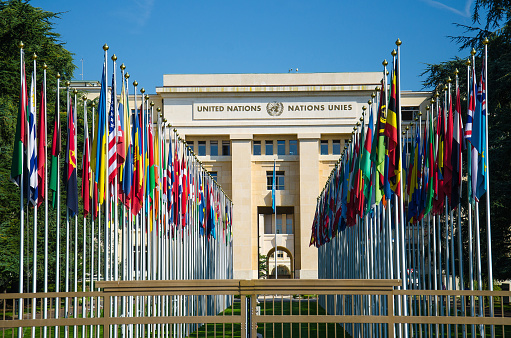
International NGOs tell UN the current situation in Tibet is
serious
Four international NGOs in their oral statement at the UN
Human Rights Council on 13 and 14 March expressed concern about the
current situation in Tibet.
Speaking at the 19th session of UN Human Rights Council under
agenda Item 4’s general debate on “Human Rights Situation that
requires council’s attention, Mr. Tenzin Samphel KAYTA (Photo)
on behalf of Society for Threatened Peoples drew the Council’s
attention on series of self-immolations taking place in Tibet.

He said the self-immolators have called for “religious
freedom in Tibet” and “return of their beloved spiritual leader
the Dalai Lama to Tibet”. 27 Tibetans have set themselves on
fire since 2009. 19 were confirmed dead and fate of others
remain unknown. Last week alone, a student of 20-year-old woman,
a 32-year-old mother-of-four and another two 18-year-old man and
monk burned themselves alive. Sadly, all three died on the scene
of their protest.
In 2008 there was widespread protests across Tibet. The
Chinese authorities forcibly cracked down on the peaceful
protestors. According to Tibetan Centre for Human Rights and
Democracy based in Dharamsala, there are over 830 known
political prisoners in Tibet. In 2011 alone, (as of 15 December)
230 known Tibetans have been arrested and detained.
Tibet today is virtually locked down and undeclared martial
law is in place. Mr. Jonathan Watts, Guardian newspaper’s
reporter based in Beijing described the situation in Ngaba area
as “conflict zone”.
The Chinese security forces opened fire on unarmed Tibetan
protestors on three occasions in three different counties in
late January this year. Five Tibetans were killed and over 30
were severely injured. Those injured from gunshots have been in
hiding without medical treatment for fear of being arrested by
the Chinese authorities.
Mr. Kayta further said instead of Tibetan monks studying
Buddhism, the Chinese communist official work teams have been
rigorously conducting communist ideology and making the monks
denounce His Holiness the Dalai Lama in the Tibetan monasteries.
Monks have been arrested, expelled or force to leave their
monasteries for refusing to denounce the Dalai Lama and
displaying allegiance to the Communist Party.
He reiterated Special Rapporteur on Food Mr. Olivier de
SCHUTTER statement at the Human Rights Council session that
Tibet is virtually closed to outsiders and all communication
channels were blocked making it hard to verify information.
Tibet is under undeclared martial law said Mr. Kayta.
He called upon the Council to urge China to respect basic
rights of the Tibetan people and allow unfettered access to
independent observers including UN High Commissioner for Human
Rights in all restive Tibetan areas.
Ms. Kalden Tsomo, spoke on behalf of the Helsinki Foundation
for Human Rights. She raised issues concerning Tibetan people’s
cultural rights and right to development.
She made reference to a Radio Free Asia report where Chinese
miners had told locals Tibetans in Driru County in Nagchu
Prefecture that “their permit had been approved by the Communist
Party secretary of the TAR, and that those Tibetans protesting
the mining site would be treated as separatists.”
She further said that in 2010, at least four Tibetans were
killed when police officers fired upon a crowd of Tibetans
protesting mining in Palyul County, Kardze Autonomous Prefecture.
Just days ago, exile sources reported that 6 monks, including
the Abbot of Lingka Monastery were given prison sentence ranging
from 4 - 5 years for participating in a month-long anti-mining
protest in Tamo, Shigatse in October - November 2011.
She called on the relevant Special Procedures of the Council
to investigate how the Tibetan Peoples’ right to development is
carried out.
Mr. Ngawang C. Drakmargyapon on behalf of Asian Indigenous
and Tribal People's Network drew the Council’s attention to
unresolved longstanding disappearance case of Gedhun Choekyi
Nyima since May 1995. He said Chinese government has so far not
implemented the Committee on the Rights of the Child’s
recommendation on 30 September 2005 asking China to “[a]llow an
independent expert to visit and confirm the well-being of Gedhun
Choekyi Nyima while respecting his right to privacy, and that of
his parents.”
He said that on 3 August 2007, China's State Administration
for Religious Affairs issued a decree that all the
reincarnations of tulkus of Tibetan Buddhism must get government
approval; otherwise they are "illegal or invalid".
However, he said that His Holiness the Dalai Lama in a public
statement on 24 September 2011 made it absolutely clear about
his reincarnation.
“When I am about ninety I will consult the high Lamas of the
Tibetan Buddhist traditions, the Tibetan public, and other
concerned people who follow Tibetan Buddhism,… I (H.H. the Dalai
Lama) shall leave clear written instructions about this. Bear in
mind that, apart from the reincarnation recognized through such
legitimate methods, no recognition or acceptance should be given
to a candidate chosen for political ends by anyone, including
those in the People’s Republic of China,” said His Holiness the
Dalai Lama.
The Press Emblem Campaign (PEC) expressed deep concern over
Chinese officials’ announcement to close the “Tibet Autonomous
Region” from February 20 to March 31, 2012 for foreigners as
well as the close off of Tibetan areas in Sichuan and Qinghai
provinces where protests, crackdown and self-immolations
occurred.
Mr. Gianfranco Fattorini, a representative of PEC quoted the
Chief of the Chinese Communist Party in Tibet who affirmed that
"Mobile phones, Internet and other measures for the management
of new media need to be fully implemented to maintain the
public's interests and national security."
One journalist team reported that their car was suspiciously
rammed by another vehicle. Reporters have been followed,
questioned for hours, asked to write confessions and had their
material confiscated.
He said that this is a clear violation of China’s regulations
governing foreign reporters, which allow them to travel freely
and interview anyone prepared to be interviewed. He urged the
Chinese authorities to provide free access to foreign
journalists to Tibetan areas as such a guarantee will allow the
international community to judge the situation with reports from
as many as possible different observers.
On 13th March afternoon, a side event was held by three NGOs
inside the UN building to discuss on human rights situation in
Tibet. In this event, 6 minutes video footage of the Central
Tibetan Administration showing Chinese security forces brutal
treatment of Tibetans during 2008 protests and self-immolations
was screened. Read
here for full report on this side event.
|